1. Overview
Simulations Labs empowers universities to move beyond theoretical cybersecurity education by providing hands-on, real-world simulation environments. These environments can be used across teaching, assessments, competitions, and final-year evaluations.
During the University Cyber Cup program, universities are encouraged to actively use these capabilities to engage students, strengthen practical learning outcomes, and increase participation across departments.
Important: The more activities a university hosts during the program period, the higher their chances of winning awards and gaining recognition across multiple categories.
2. Core University Use Cases
2.1 Skill Assessments
Evaluate student knowledge using hands-on simulations that measure real-world cybersecurity skills beyond theoretical understanding.
How universities use it:
- Entry-level and mid-term assessments
- Skill benchmarking across students or cohorts
- Pre/post training evaluations
- Placement readiness testing
Impact:
- Objective measurement of practical skills
- Better identification of top-performing students
- Strong alignment with industry expectations
2.2 Classroom Labs
Transform traditional lectures into interactive, browser-based learning experiences where students apply concepts in real time.
How universities use it:
- Weekly or topic-based lab sessions
- Guided exercises aligned with curriculum
- Instructor-led live lab demonstrations
- Homework assignments using simulations
Impact:
- Higher student engagement
- Improved concept retention through practice
- Seamless integration between theory and application
2.3 Competitions & Clubs
Empower cybersecurity clubs to host engaging competitions that promote teamwork, creativity, and problem-solving.
How universities use it:
- Internal CTF competitions within clubs
- Inter-department or inter-university contests
- Hackathon-style cybersecurity events
- Club onboarding challenges for new members
Impact:
- Stronger student community engagement
- Development of teamwork and competitive skills
- Discovery of emerging cybersecurity talent
2.4 Capstone Projects & Exams
Provide final-year students with realistic, scenario-based challenges that simulate professional cybersecurity environments.
How universities use it:
- Final-year capstone cybersecurity projects
- Practical exams replacing or complementing written tests
- Real-world simulation scenarios for graduation requirements
- Portfolio-building assessments for students
Impact:
- Strong industry readiness for graduates
- More meaningful final assessments
- Demonstration of applied cybersecurity expertise
3. Platform Features That Enable These Use Cases
3.1 Challenge Library through Simulations Copilot
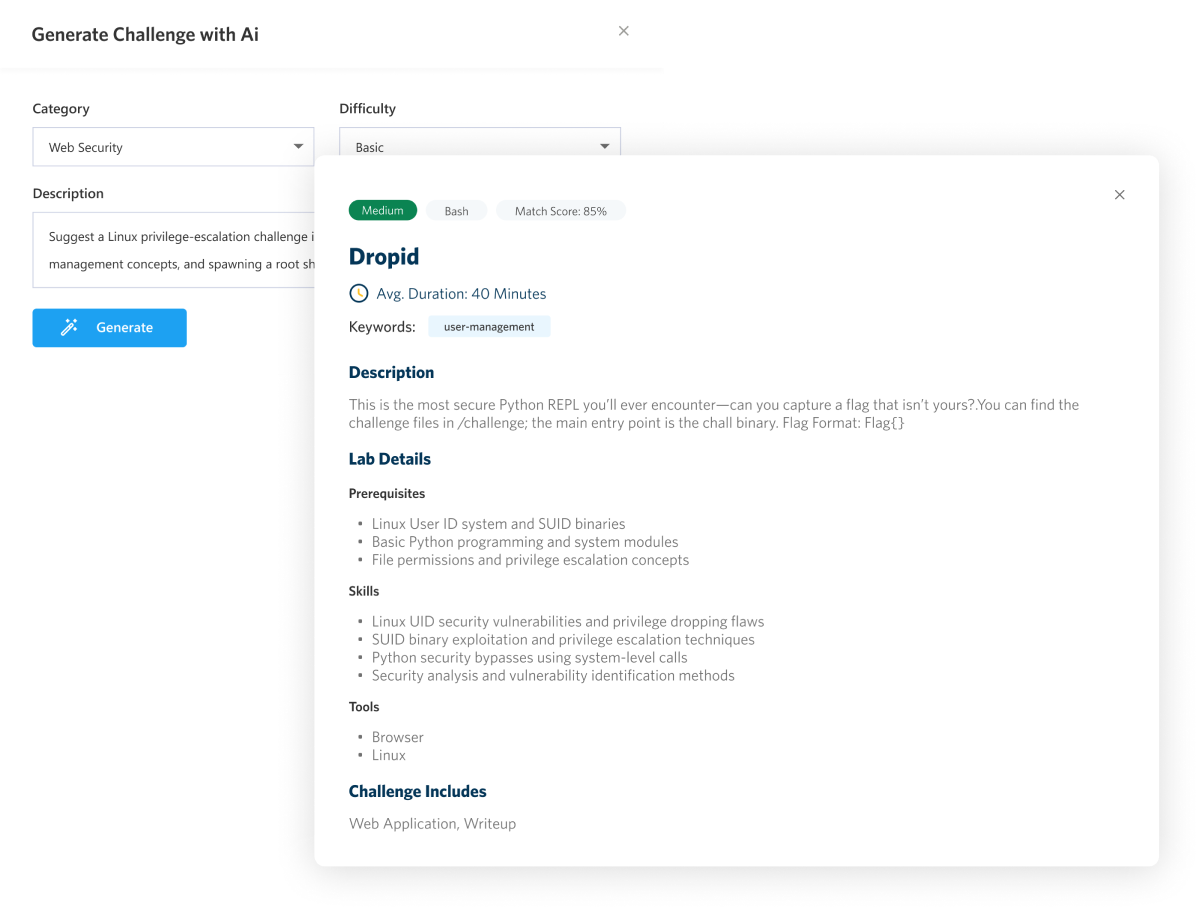
A curated library of cybersecurity challenges across domains such as:
- Web Security
- Mobile Security
- Cloud Security
- Digital Forensics
- Secure Coding
- And more
This ai-powered tool helps universities quickly design activities using existing content.
How it works:
- Click “Build with AI”
- Describe the desired activity or learning outcome
- The system recommends relevant challenges from the library
- Preview each challenge, including the prerequisites and learning outcomes, then select the challenges that best map to your curriculum. The selected challenges are then automatically assembled and created in your university’s library for use in classrooms, assessments, or competitions
For more details, visit the Simulations Copilot guide in the Help Center.
3.2 Docker Container Hosting
Many creators wanted the flexibility to build their own environments—especially web apps or multi-service setups—without dealing with hosting, ports, or infrastructure. So we designed a workflow that gives them total control while removing all the complexity.
How it works:
Creators simply upload their Docker container. From that moment, Simulations Labs takes over every part of deployment automatically.
Our system:
- Processes the container
- Hosts it securely
- Configures networking and routing
- Generates a ready-to-use challenge link
- Spins up isolated instances for every player
This workflow allows users to offer realistic, hands-on scenarios where participants interact with a live environment to solve the challenge. These are perfect for topics like exploitation, privilege escalation, and network security.
3.3 Analytics & Monitoring Dashboard
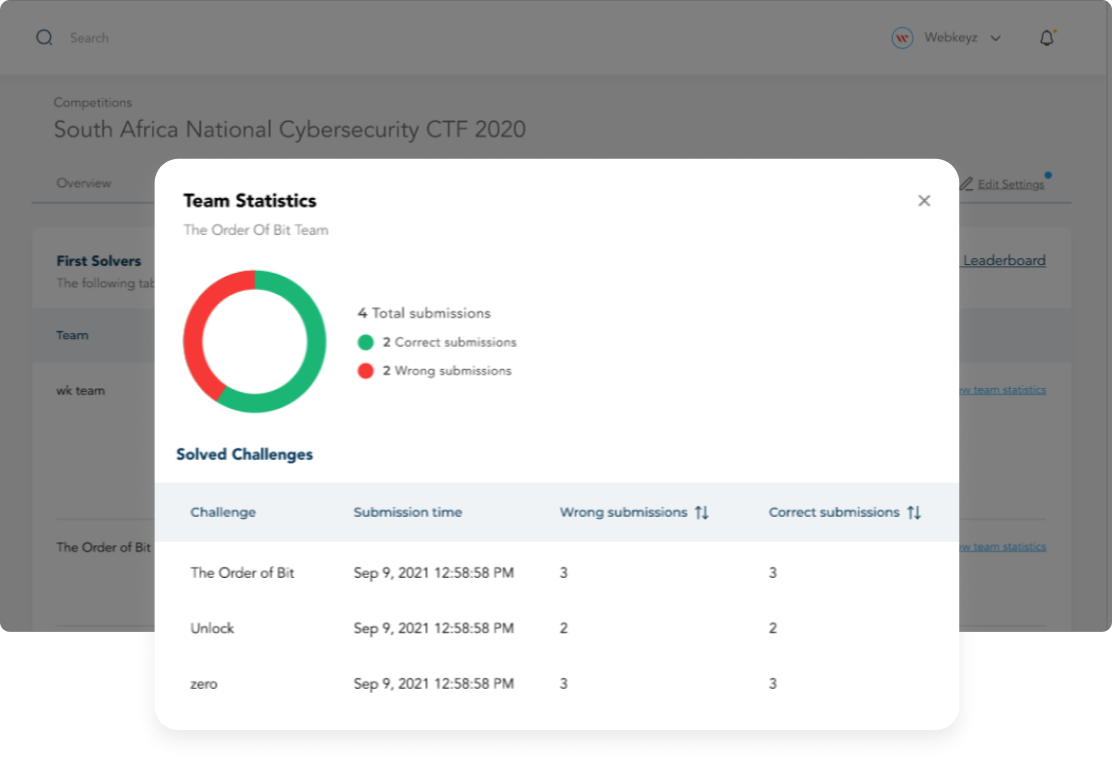
Real-time visibility into participant performance:
- Progress tracking
- Completion rates
- Leaderboards
- Skill breakdown insights
4. Program Engagement & Awards
The University Cyber Cup program rewards active and consistent platform usage throughout the program duration.
Key Principle:
Universities that run more activities increase their chances of winning awards.
Activities that contribute to success:
-
Hosting skill assessments
-
Running classroom lab sessions
-
Organizing competitions and club events
-
Conducting capstone or exam simulations
-
Engaging multiple student groups consistently
5. Award Categories
Universities are evaluated across multiple engagement and performance dimensions:
- Most Active University
- Highest Student Participation
- Best Use of Simulations Labs in Curriculum
- Best Cybersecurity Competition Design
- Best Custom Challenge Creation
5. Summary
Simulations Labs enables universities to modernize cybersecurity education through practical, interactive, and scalable learning experiences. From classroom integration to competitions and final-year assessments, the platform supports the full academic journey.
By actively using these use cases during the program period, universities not only improve student outcomes but also increase their visibility and chances of winning awards in the University Cyber Cup.