For years, CTFd has been a familiar choice for running a CTF competition. It helped many universities, bootcamps, and communities launch events quickly and build basic capture the flag competitions.
But the needs of cybersecurity programs have changed.
Today, universities and training centers are not just hosting one-off events. They are running ongoing cybersecurity training, hands-on labs, assessments, workshops, recruitment challenges, and large-scale learning experiences. That shift has exposed a gap between what a traditional self-managed CTF platform offers and what modern institutions actually need.
So why are so many teams looking for an alternative to CTFd?
Because they want more than a scoreboard and a challenge upload page. They want easier CTF hosting, better scalability, lower operational overhead, stronger analytics, and richer cybersecurity simulations that support real teaching outcomes.
In this article, you'll learn:
- Why institutions are rethinking CTFd
- Where self-hosted CTF platforms create friction
- What universities now expect from a modern cybersecurity education platform
- What to look for when choosing a better way to host CTF events and labs
The Bigger Shift: From One-Off CTFs to Continuous Cybersecurity Training
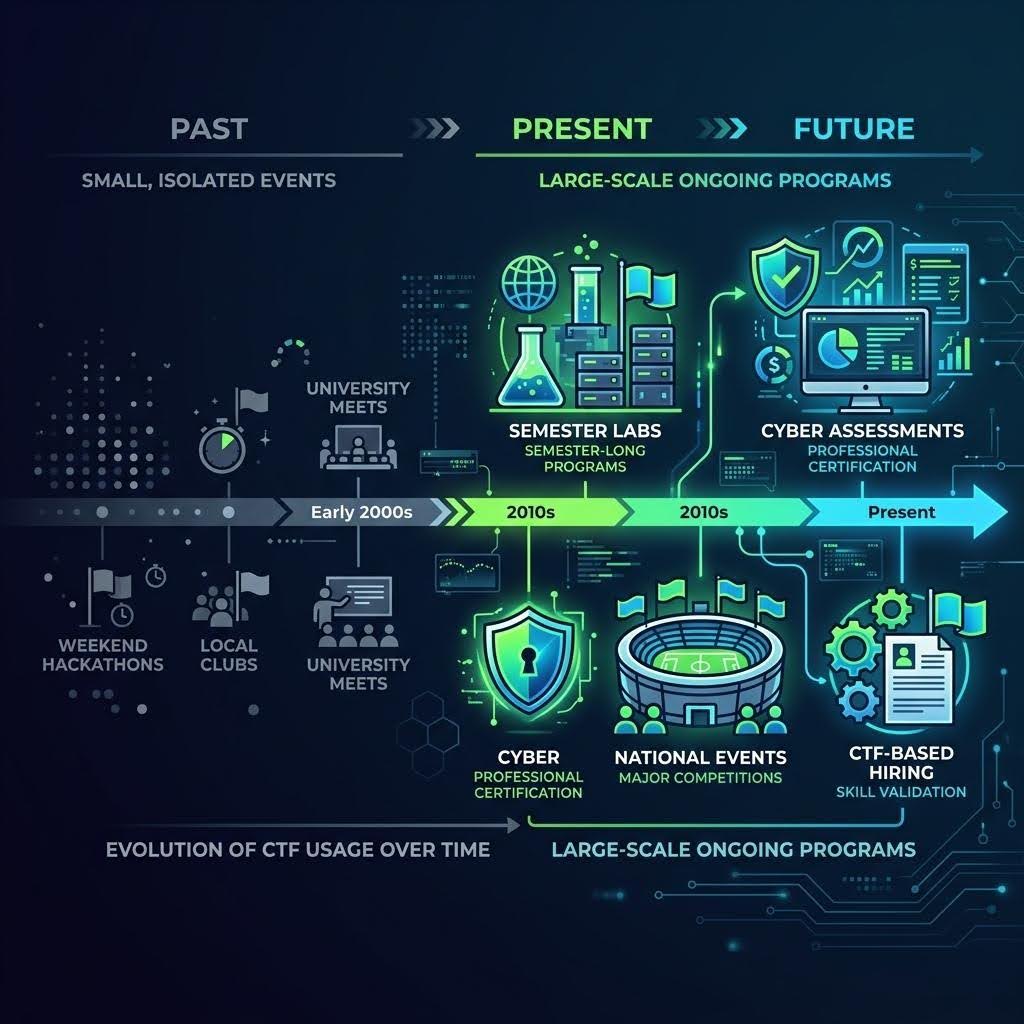
A few years ago, many organizations treated CTFs as isolated competitions. They were useful for:
- Student clubs
- Weekend hackathons
- Conference side events
- Small internal skills challenges
Now, the role of CTFs has expanded significantly.
Universities and organizations increasingly use them for:
- Skills assessment across cohorts
- Hands-on teaching and Curriculum support for practical labs and ongoing cybersecurity trainings throughout the semester
- Candidate evaluation and applicant screening
- Community engagement and public competition events
- Employer branding and market visibility
That changes the platform requirements completely.
Instead of asking, "Can this run a challenge board?" teams are now asking:
- Can this support recurring lab tests throughout a semester?
- Can we launch Docker-based environments without DevOps work?
- Can this scale from 50 to 500 participants?
- Can non-technical staff create or launch simulations easily?
- Can we gather analytics that improve teaching outcomes?
This is where many institutions start to outgrow CTFd.
Why CTFd No Longer Fits Many Universities and Training Centers
1. Self-Hosting Creates Operational Overhead
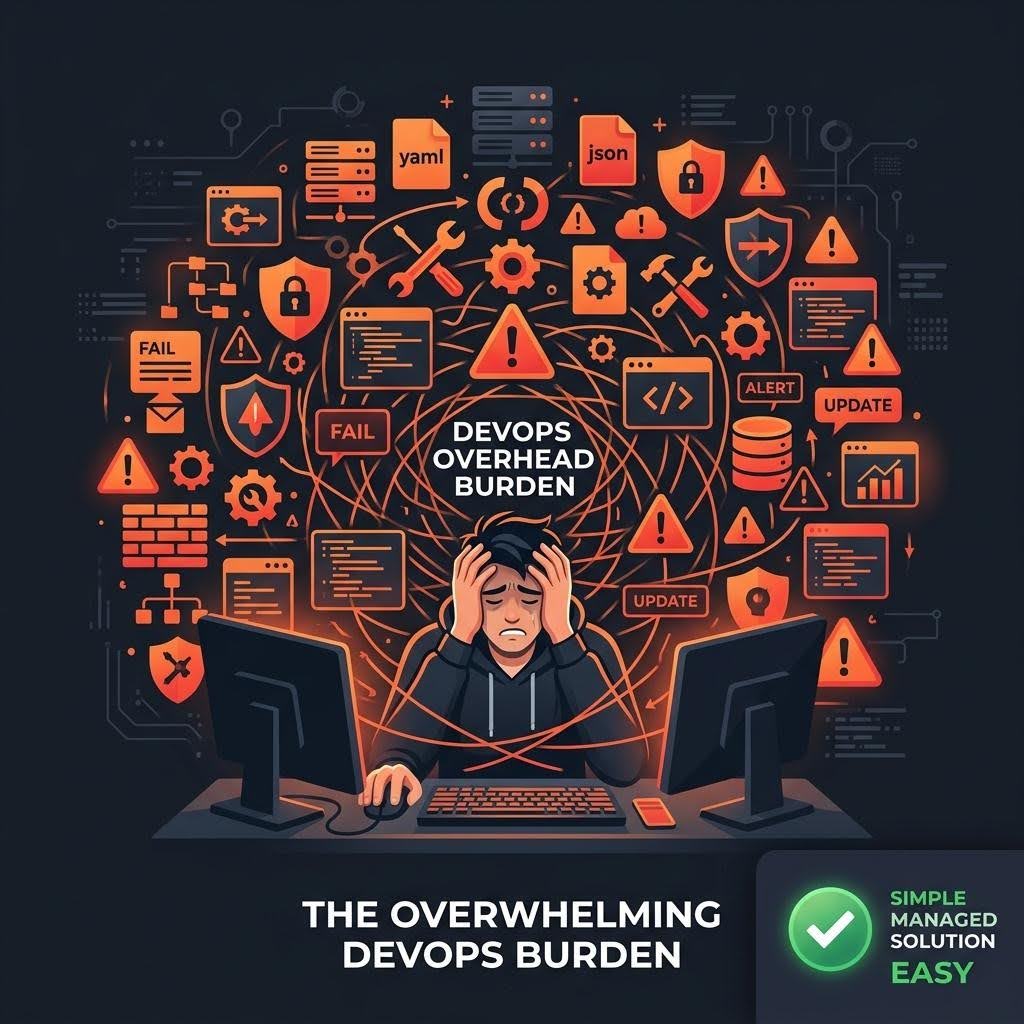
One of the biggest reasons organizations move away from CTFd is simple: infrastructure management.
CTFd can work well for technically capable teams. But many universities and training centers do not want to spend their time on:
- Server provisioning
- Environment setup and configuration
- Ongoing maintenance and upgrades
- Backup management
- Security hardening
- Performance tuning
- Incident response during live events
That's a heavy burden — especially for academic teams already stretched across teaching, student support, and administration.
For a university, every hour spent maintaining a platform is an hour not spent improving instruction.
Key issue: CTFd often assumes you have the technical resources to run it well.
What institutions want instead: Managed CTF Hosting with minimal infrastructure overhead — where the platform handles uptime, security, and scaling automatically.
2. Scaling Events Is Harder Than It Looks
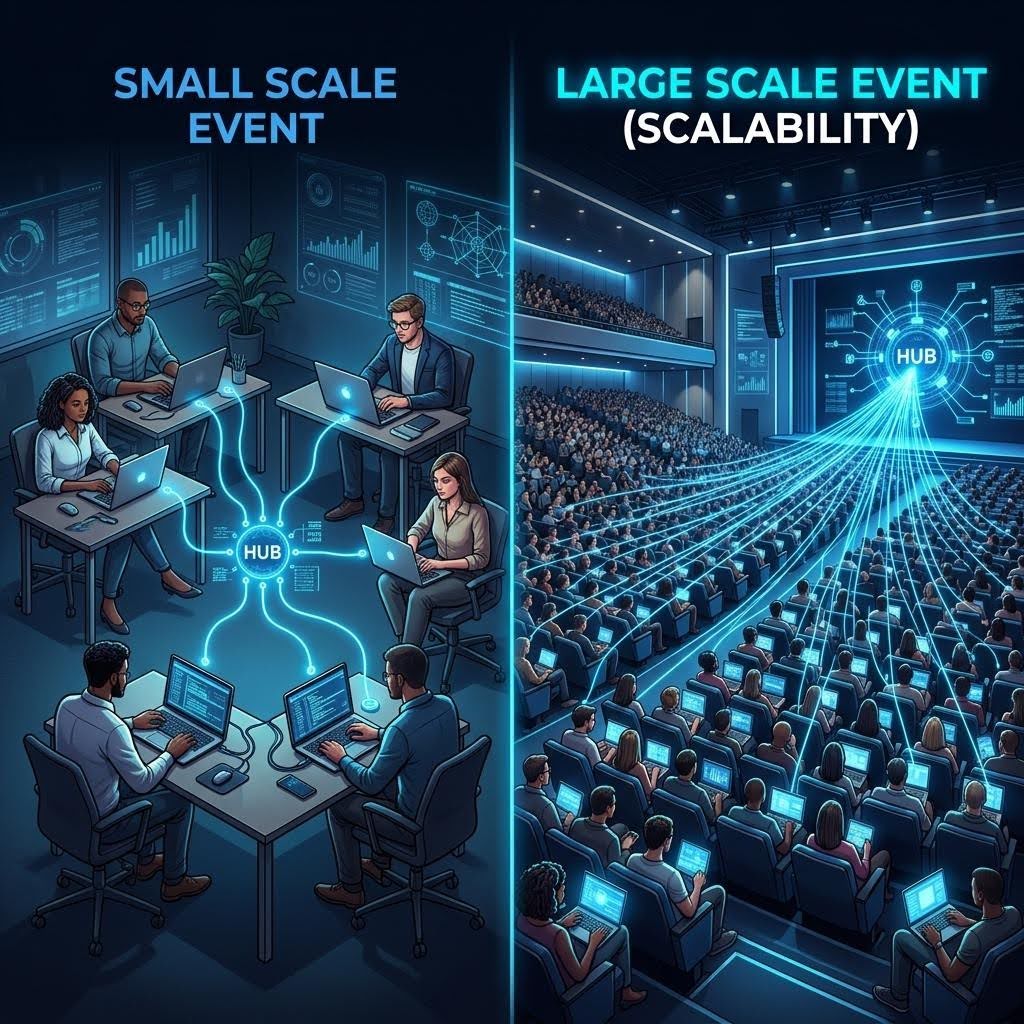
A CTF may work fine in testing with a small group. The real problem appears when participation grows.
Universities and organizers often run events for:
- Entire departments
- Inter-university competitions
- Bootcamp cohorts
- National student communities
- Sponsored public events with hundreds of concurrent players
At that point, scalability becomes critical.
Common concerns include:
- Will the platform stay online during peak traffic?
- Can challenge environments be provisioned quickly?
- What happens if dozens or hundreds of users start labs at once?
- Can organizers monitor participation without chaos?
This is why many organizers prefer platforms that automatically handle uptime, monitoring, isolation, and scale — without requiring manual engineering intervention.
The lesson: A CTF platform is not only about features. It is about reliability under load.
Without analytics, a CTF becomes entertainment. With analytics, it becomes a serious training and assessment tool.
3. Non-Technical Teams Need Easier Workflows
Another major reason organizations move away from CTFd is usability.
Not every person launching a cyber event is a platform engineer. In many universities, the people responsible for program delivery may include:
- Instructors and professors
- Lab coordinators
- Training managers
- Student club leaders
- Event organizers
These users need a system that makes it easy to:
- Create simulations without technical expertise
- Upload or choose challenges from a library
- Launch events in minutes
- Share access with participants easily
- Monitor progress in real time
- Export reports for stakeholders
If every task requires technical setup, the platform becomes a bottleneck.
This is especially important for institutions trying to scale cybersecurity training across multiple courses, departments, or cohorts.
What Makes Simulations Labs a Strong Alternative to CTFd
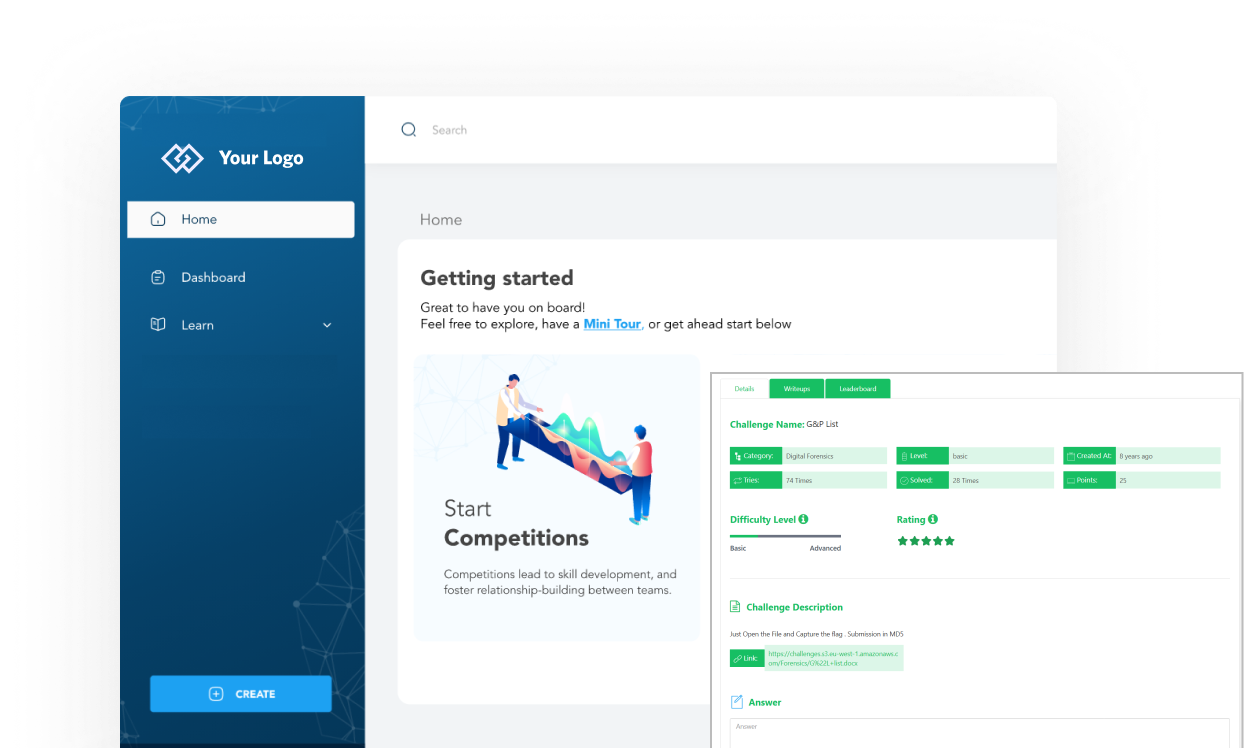
For institutions evaluating a modern alternative to CTFd, Simulations Labs is positioned around exactly the pain points described above.
Based on its platform model, Simulations Labs offers:
- Fully managed hosting without infrastructure setup or DevOps work
- Simulation AI Copilot — an AI-powered engine with access to a large library of ready-made challenges across multiple cybersecurity domains
- Support for diverse challenge categories, including Web Security, OSINT, Malware Reverse Engineering, Digital Forensics, Network Security, and Cryptography
- Docker container hosting with automatic deployment and isolation — no engineering required
- On-demand labs provisioned per student click, and downloadable labs for analysis-based exercises
- A dynamic flag feature to prevent flag sharing and detect cheating
- User-friendly dashboard for launching and managing simulations with minimal effort
- Real-time monitoring and live leaderboard for engagement during events
- Detailed analytics, including first solvers, frequent wrong attempts, and solver percentages per challenge
- Exportable reports in CSV, Excel, or PDF
- Flexible hosting options — SaaS, Private Hosting, or Local Hosting
- Participant prerequisite filters (gender, university, country) for targeted programs
That makes it relevant not only for competitions, but for broader cybersecurity training and cybersecurity education use cases.
Why This Matters for Universities and Training Centers
A platform like Simulations Labs aligns more closely with academic and organizational needs because it supports:
- Hands-on teaching with realistic, provisioned environments
- Repeatable labs that can be reused across cohorts and semesters
- Scalable events from small classes to national competitions
- Learner performance tracking with rich analytics
- Simpler operational workflows for non-technical organizers
It also reduces the gap between running a single event and building a sustainable, ongoing training program.
If your team wants to explore managed event delivery, the Host CTF Competition page is a useful starting point. For broader platform information, explore the Simulations Labs website or browse the guides and blogs.
Conclusion
The move away from CTFd is not really about abandoning a popular tool. It is about recognizing that expectations around CTF hosting, cybersecurity simulations, and cybersecurity education have fundamentally changed.
Universities and organizations now want platforms that:
- Support practical learning at scale
- Reduce infrastructure burden
- Provide measurable outcomes and analytics
- Enable non-technical organizers to run professional events
They want tools that help them teach, assess, and engage learners — not just run a scoreboard.
If your institution is looking for an alternative to CTFd, the right next step is to evaluate platforms based on:
- Operational simplicity
- Hands-on lab support
- Scalability
- Built-in analytics
Not just tradition or familiarity.
👉 Explore Simulations Labs or watch product demo.
Frequently Asked Questions
1. Why are universities looking for an alternative to CTFd?
Many universities want less infrastructure management, more scalable CTF hosting, stronger analytics, and better support for hands-on labs. CTFd can still work for technically capable teams, but it often requires more engineering effort than academic teams want to maintain.
2. Is CTFd good for cybersecurity education?
It can be useful for basic competitions, but modern cybersecurity education often requires easier event management and learner performance tracking. That is why many institutions evaluate newer managed platforms.
3. What should I look for in a platform to host CTF events?
Look for managed hosting, Docker lab support, real-time monitoring, analytics, scalability, and a user-friendly dashboard. These features matter far more than simple challenge upload tools when running ongoing programs.
4. What is the benefit of managed CTF hosting for training centers?
Managed CTF hosting reduces setup time, removes maintenance burden, improves reliability, and lets training teams focus on learner outcomes instead of infrastructure.
5. Are capture the flag competitions still useful for hands-on teaching?
Yes. Capture the flag competitions remain highly effective when they are integrated into a broader training model that includes realistic labs, guided learning, and measurable assessment.
6. How can Simulations Labs help universities and organizers?
Simulations Labs offers managed hosting, hands-on simulation support, real-time dashboards, analytics with exportable reports, the Simulation AI Copilot for easy challenge creation, and flexible challenge delivery — all designed for universities, training centers, and CTF organizers.
7. What is the Simulation AI Copilot?
The Simulation AI Copilot is an AI-powered feature that gives users access to a large library of ready-made cybersecurity challenges. It enables non-technical users to create and deploy professional-grade simulations quickly and easily — without needing deep technical expertise or challenge-building experience.
8. Does Simulations Labs support large-scale events?
Yes. Simulations Labs automatically manages security, monitoring, and uptime — even during large-scale events. Organizers don't need to worry about servers being attacked, crashing, or going offline.