Ask almost any developer candidate today whether they use an AI coding assistant, and the answer will be yes. That is not a problem in itself. The problem is that many hiring processes have not caught up. They still test whether a candidate can write working code, when the more important question in 2026 is whether they can recognize insecure code, particularly when a confident AI tool produced it.
The Code Is Faster. It Is Not Safer.
The research is remarkably consistent. Veracode tested more than 100 large language models on security-sensitive coding tasks and found that roughly 45% of generated samples introduced OWASP Top 10 vulnerabilities, with no meaningful improvement across testing cycles through early 2026. CodeRabbit's analysis found that AI-generated code produced 1.57 times more security findings than human-written code and was 2.74 times more likely to introduce cross-site scripting. GitGuardian reported that repositories using GitHub Copilot were 40% more likely to leak at least one secret than the public-repository baseline.
The human factor compounds the risk. A Stanford user study by Perry et al. found that developers using AI assistants wrote less secure code, yet were more likely to believe their code was secure. In other words, the tool not only introduces flaws; it can also lower a developer's guard.
The consequences of getting this wrong are rising too. Under the EU Cyber Resilience Act, vulnerability reporting obligations for products with digital elements took effect on 11 September 2026. For any organization shipping software into the EU, insecure code is now a compliance matter as well as a security one.
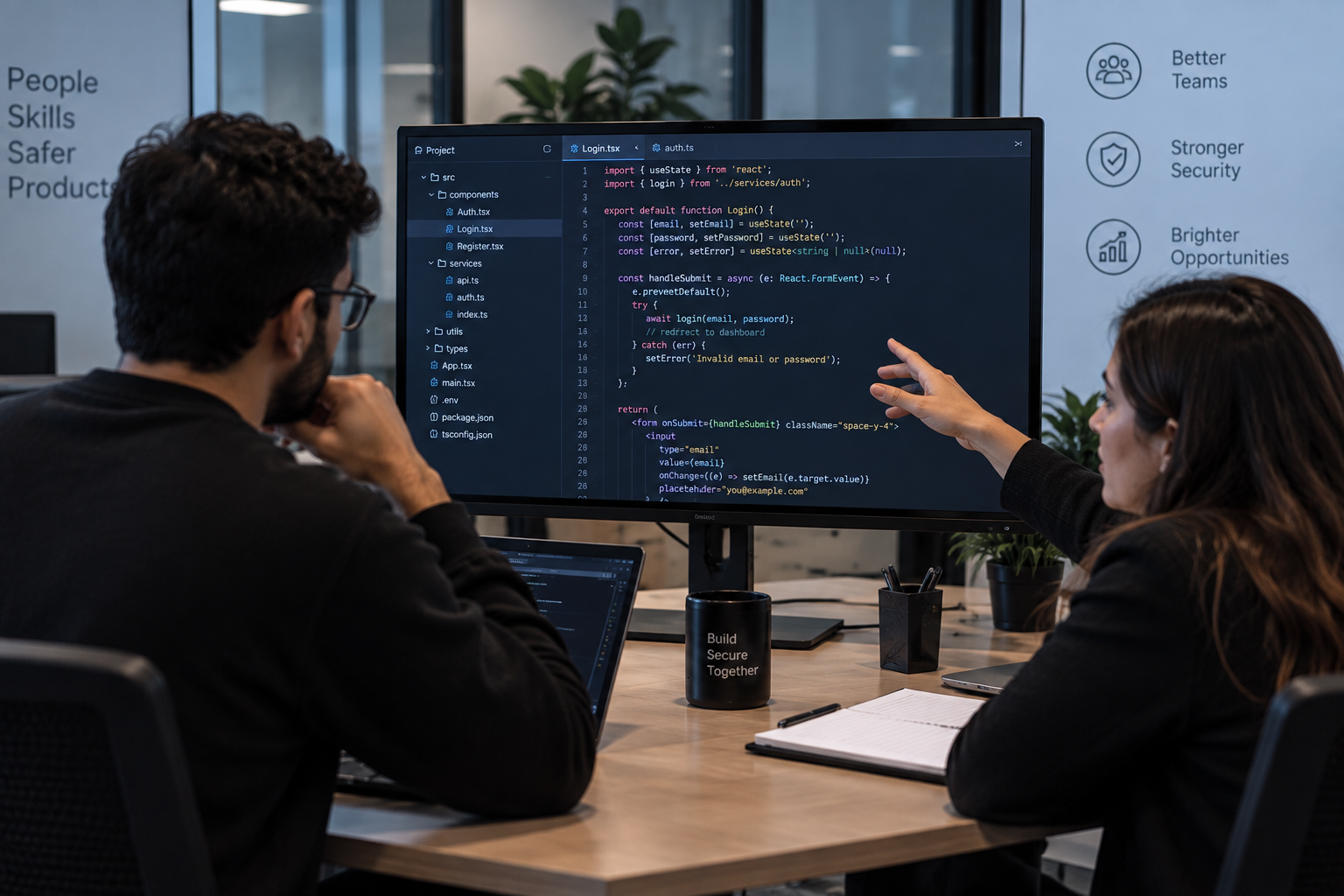
Why Traditional Assessments Miss the Point
Most technical hiring still relies on one of three formats: algorithm puzzles, take-home projects, or multiple-choice security quizzes. Each has a blind spot. Algorithm puzzles measure problem-solving but reveal nothing about security judgment. Take-home projects can now be completed largely by AI, so they say little about the candidate's own capabilities. Quizzes test whether someone can define SQL injection, not whether they would spot one buried in a 200-line pull request at the end of a long sprint.
The skill that matters has shifted from writing code to reviewing it critically. Your assessment should reflect that shift.
What a 2026 Secure Coding Assessment Should Test
Review, Not Just Authorship
Give candidates realistic, working AI-generated code that contains subtle vulnerabilities, such as injection flaws, broken access control, hardcoded secrets, or overly permissive cloud permissions. Ask them to find, explain, and fix the issues. This mirrors the work they will actually do every day.
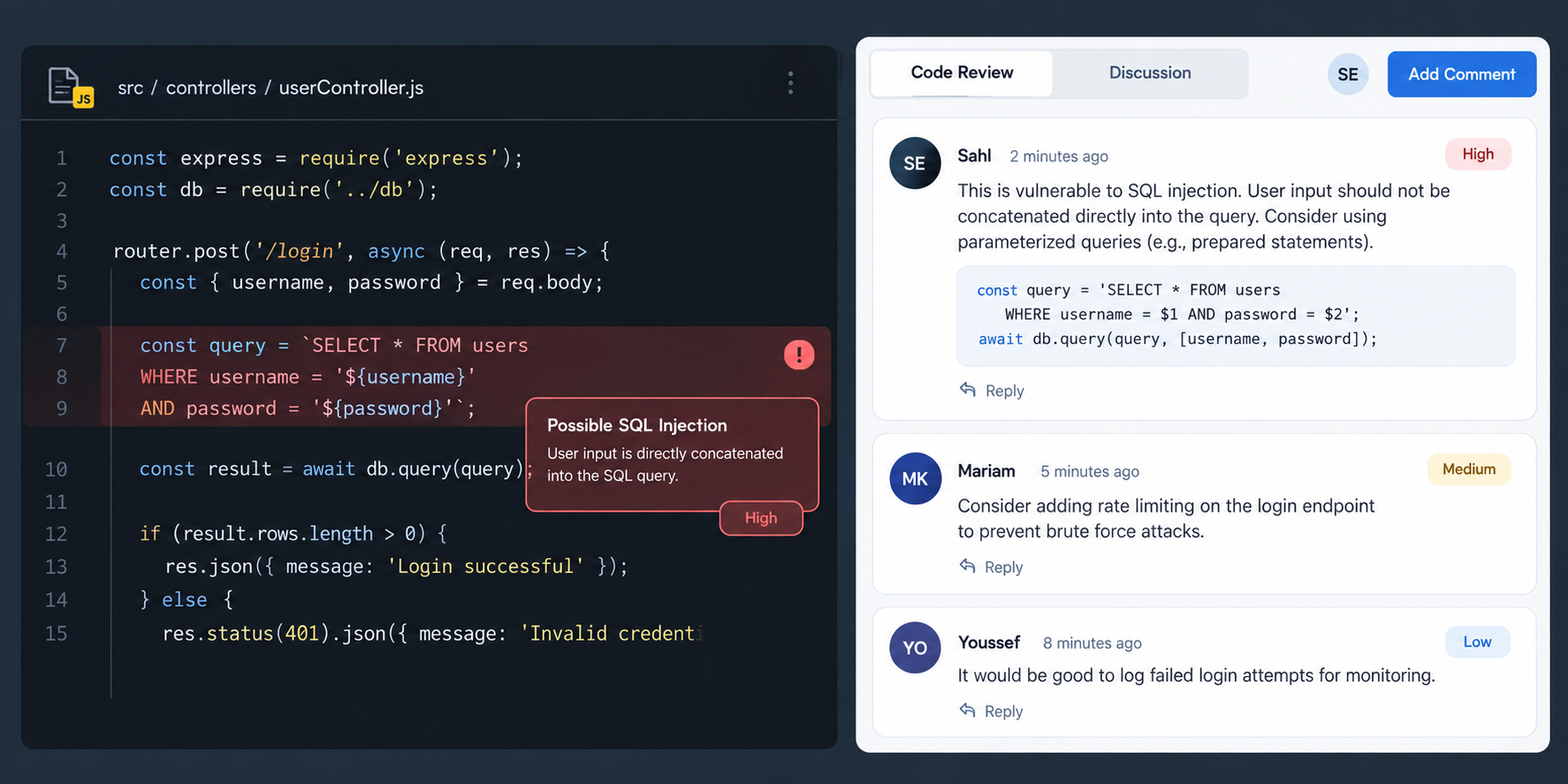
Exploitation, Not Just Recognition
A candidate who can identify a vulnerability and demonstrate why it is exploitable understands it far better than one who can only name it. Hands-on challenges where the flag is reachable only by exploiting the flaw provide a clear, objective signal.
Judgment About AI Tooling
Include scenarios where an AI assistant proposes a fix that looks correct but is not, or where a coding agent is asked to execute a command from an untrusted configuration file. Strong candidates will question the output rather than accept it.
Measurable, Comparable Results
Every candidate should face the same environment and be scored consistently, so you are comparing skills rather than interview performance. Time to solve, approach, and completeness all provide useful insight.
The Benefits Extend Beyond Hiring
Hands-on assessments do more than filter candidates. They signal to applicants that your organization takes security seriously, strengthening your employer brand among security-minded engineers. The same challenges can be reused internally through security team upskilling programs to benchmark existing teams, identify skill gaps, and direct training where it is genuinely needed. And when regulators or customers ask how you ensure secure development practices, you will have documented evidence rather than assumptions, increasingly relevant given the EU Cyber Resilience Act's active reporting obligations.
Build Your Assessment with Simulations Labs
 Simulations Labs' applicant assessment platform makes it straightforward to run hands-on, challenge-based assessments for applicants. With a no-code platform, an extensive scenario library, and comprehensive analytics, you can create secure coding challenges tailored to the roles you are hiring for and see precisely how each candidate performs.
AI will continue to write more of your code. Make sure the people you hire can tell when it is wrong.
Ready to build a secure coding assessment for the AI era? Get started for free on Simulations Labs (no credit card required)
FAQ
Why isn't a take-home coding project a reliable hiring signal anymore? Because a meaningful share of a take-home project can now be completed with AI assistance, it increasingly measures how well a candidate can prompt a tool rather than their own coding or security judgment. A live, proctored, or scored hands-on environment gives a clearer signal of individual skill.
What's the difference between testing recognition and testing exploitation? Recognition means a candidate can name a vulnerability type when asked. Exploitation means they can demonstrate why it's actually dangerous by triggering it, for example, retrieving a flag that's only reachable by successfully exploiting the flaw. The second is a much stronger signal of genuine understanding.
Should candidates be allowed to use AI tools during a secure coding assessment? This depends on what you're measuring. If the goal is to test raw coding speed, restricting AI tools makes sense. If the goal is to test judgment about AI-generated code, which better reflects real 2026 job conditions, including AI-assisted scenarios in the assessment itself is often more realistic than banning the tools outright.
How does the EU Cyber Resilience Act affect hiring practices? It doesn't dictate hiring practices directly, but it raises the stakes of insecure code shipping into EU markets, since manufacturers now have active vulnerability reporting obligations under Article 14. Organizations subject to the CRA have a stronger practical reason to verify secure coding skill during hiring rather than assuming it from a resume.
Can the same assessment challenges be reused for training existing employees? Yes, this is one of the more efficient uses of a hands-on challenge library. The same scenarios built for candidate assessment can be repurposed to benchmark current team members, revealing skill gaps that can then be addressed through targeted training rather than generic company-wide programs.