For years, the take-home test was the gold standard of technical hiring. Send the candidate a problem, give them a weekend, and review what comes back. It felt fair, scalable, and objective.
Then AI assistants arrived — and quietly broke the model.
Today, a candidate can paste your carefully crafted assessment into a chatbot and return a polished answer in minutes. The write-up is clean, the reasoning sounds senior, and the code runs. The only problem? You have no idea whose skills you just evaluated.
The uncomfortable truth about take-home tests
Most take-home assessments share three weaknesses that AI tools exploit perfectly:
1. They're static. The question never changes, the answer never changes, and once it leaks to a forum or an AI's training data, every future candidate effectively has the answer key.
2. They're unsupervised. You see the final artifact, not the process. Whether the candidate struggled productively for hours or outsourced the whole thing, the deliverable looks identical.
3. They reward writing, not doing. Security work is investigative and interactive. A document about how someone would respond to an incident tells you very little about how they actually behave inside a live environment under pressure.
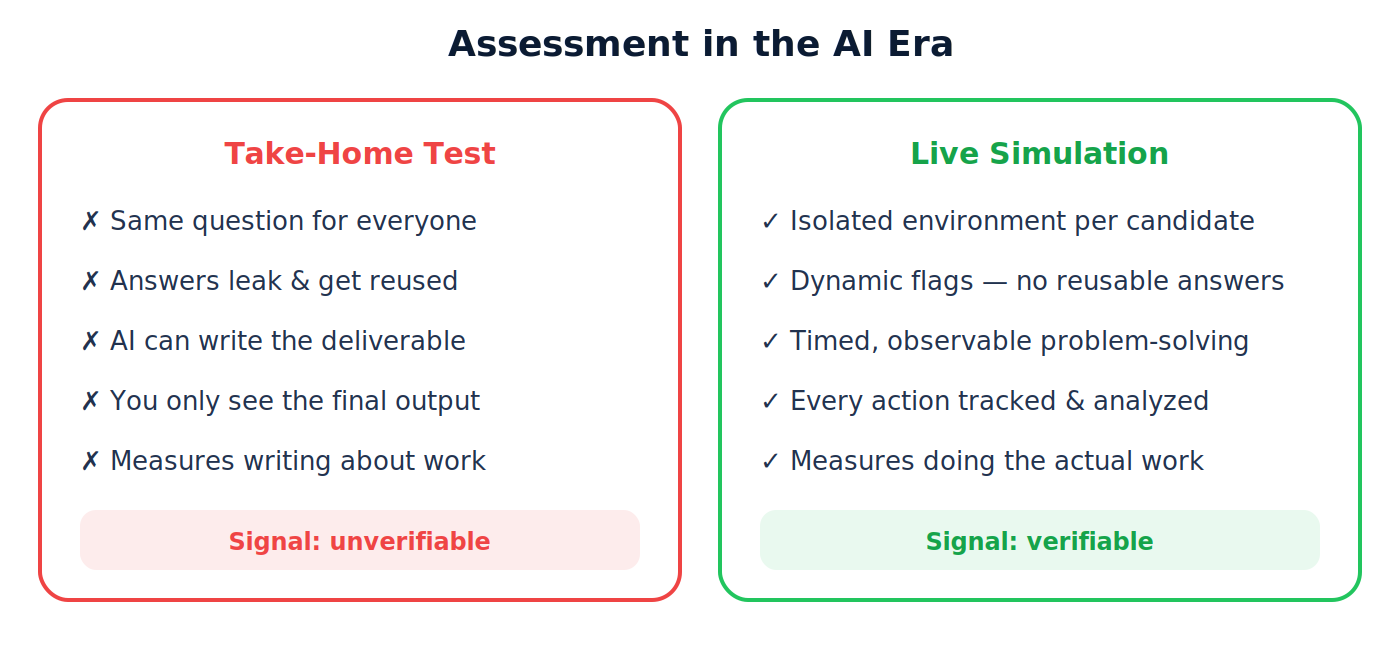
Figure 1 — Why static assessments lose their signal while live simulations keep it.
Why live simulations are different
A live simulation drops candidates into a real, working environment — a vulnerable web application, a compromised network, a system that needs investigating — and asks them to solve the problem in real time, inside a window you control.
That structural difference is what makes it resistant to shortcuts:
Every candidate gets their own isolated environment. On Simulations Labs, each participant works in a dedicated instance with dynamic flags, meaning the “answer” is generated uniquely per session. There is nothing to copy from a friend, a forum, or a previous cohort.
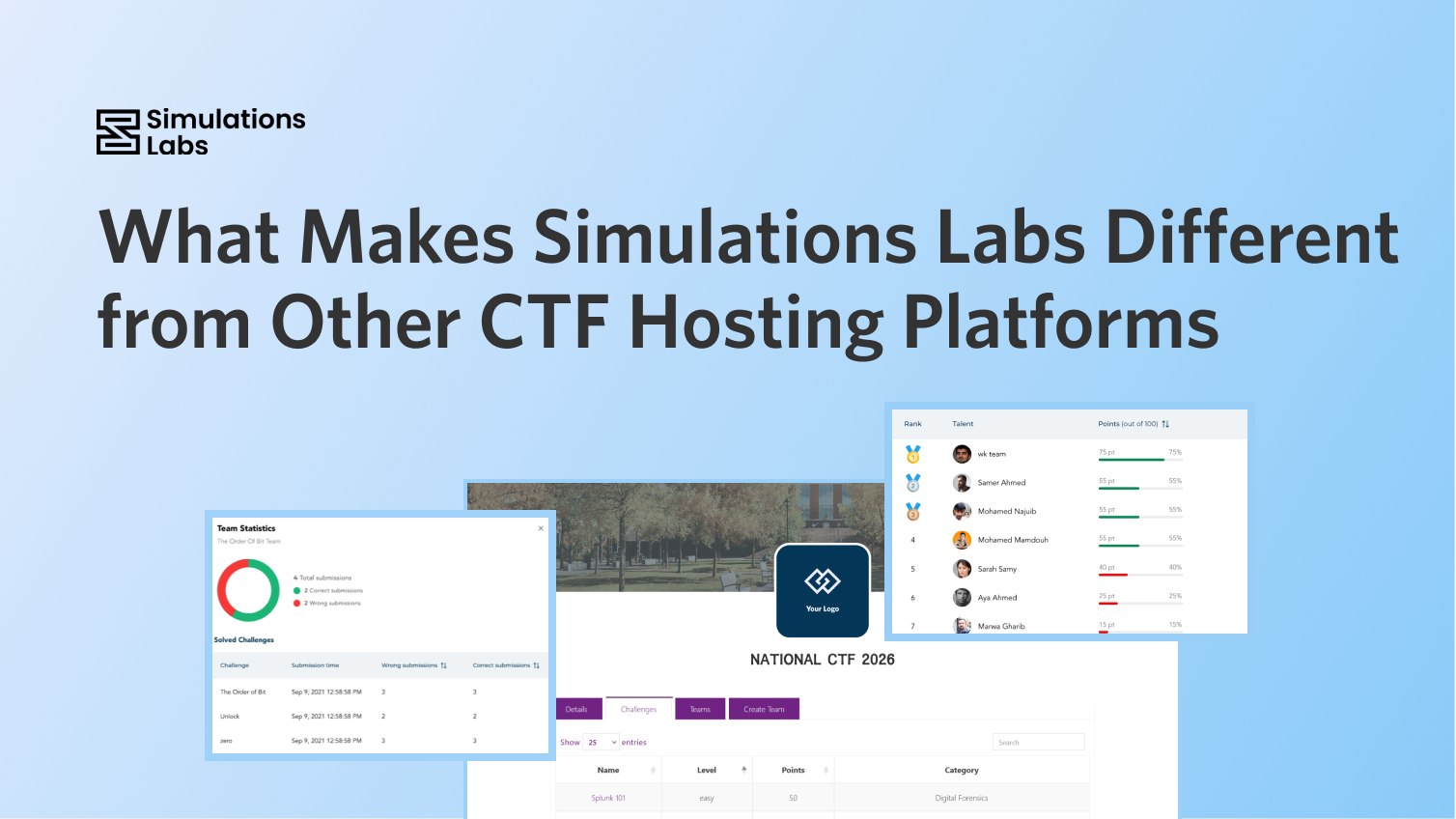
The work happens live, not offline. Sessions are timed and trackable. Through real-time leaderboards and submission tracking, you watch progress as it happens: when each candidate started, what they attempted, where they got stuck, and how long each step took.
Process becomes visible. Even if a candidate consults AI for a hint — just as they would on the job — they still have to apply it themselves inside the environment. Using a tool well is a skill; pasting a question into a chatbot is not. A live simulation can tell the two apart. The behavioral data shows you who genuinely navigated the problem.
Designing assessments AI can't shortcut
The strongest hiring simulations share a few traits: they're hands-on rather than essay-based, they involve multi-step investigation rather than a single lookup, and they reflect the actual role. Assessing a SOC analyst? Use log analysis and incident triage scenarios. Hiring a penetration tester? Use exploitation paths in a sandboxed environment.
You don't need to build these from scratch. Our Simulations Copilot lets you describe the role and skills you're hiring for, then instantly recommends ready-made, expert-designed scenarios from a continuously updated library — covering web security, network security, cryptography, forensics, and more.
The bonus: candidates prefer it
Skilled professionals would rather show what they can do than write another essay or sit through trivia questions. A well-run simulation signals that your team takes craft seriously — which is why companies also use these events for employer branding, turning assessment into a memorable candidate experience instead of a chore.
The bottom line
AI didn't make technical assessment impossible — it made static assessment obsolete. The fix isn't banning tools or policing candidates. It's moving the evaluation into a live environment where the only way to score is to demonstrate the skill itself.
Make your next hire on evidence, not essays
Launch a live, isolated assessment environment for your candidates in minutes — no code required. Get Started for Free — no credit card required.