Introduction
Ask most engineering leaders whether their teams understand the OWASP Top 10, and the answer is usually yes. Ask those same leaders to prove it under pressure, and the answer becomes less certain.
That gap matters. Many developers can define common web risks in theory, but struggle to recognize them in code, reproduce them in a safe lab, or fix them quickly in a realistic workflow. That is where many application security programs lose momentum.
If you want stronger cybersecurity outcomes, the goal is not just awareness. It is a measurable performance. In this article, you will learn how to evaluate developer understanding of the OWASP Top 10, what weak understanding looks like in practice, and how Cyber Drills, Cyber Ranges, and Cybersecurity Simulations can turn security knowledge into real-world capability.
Why the OWASP Top 10 Still Matters for Modern Development
The OWASP Top 10 remains one of the clearest frameworks for teaching application security because it focuses on the categories developers are most likely to encounter in production systems.
It helps teams build a common language around issues such as:
- Broken access control
- Cryptographic failures
- Injection vulnerabilities
- Insecure design
- Security misconfiguration
- Vulnerable and outdated components
- Identification and authentication failures
- Software and data integrity failures
- Security logging and monitoring failures
- Server-side request forgery
For startups, SMEs, and enterprises alike, these are not abstract risks. They are categories that show up in code reviews, penetration tests, bug bounty reports, and real incidents.
Mini summary: The OWASP Top 10 is still useful because it connects security education directly to software risk.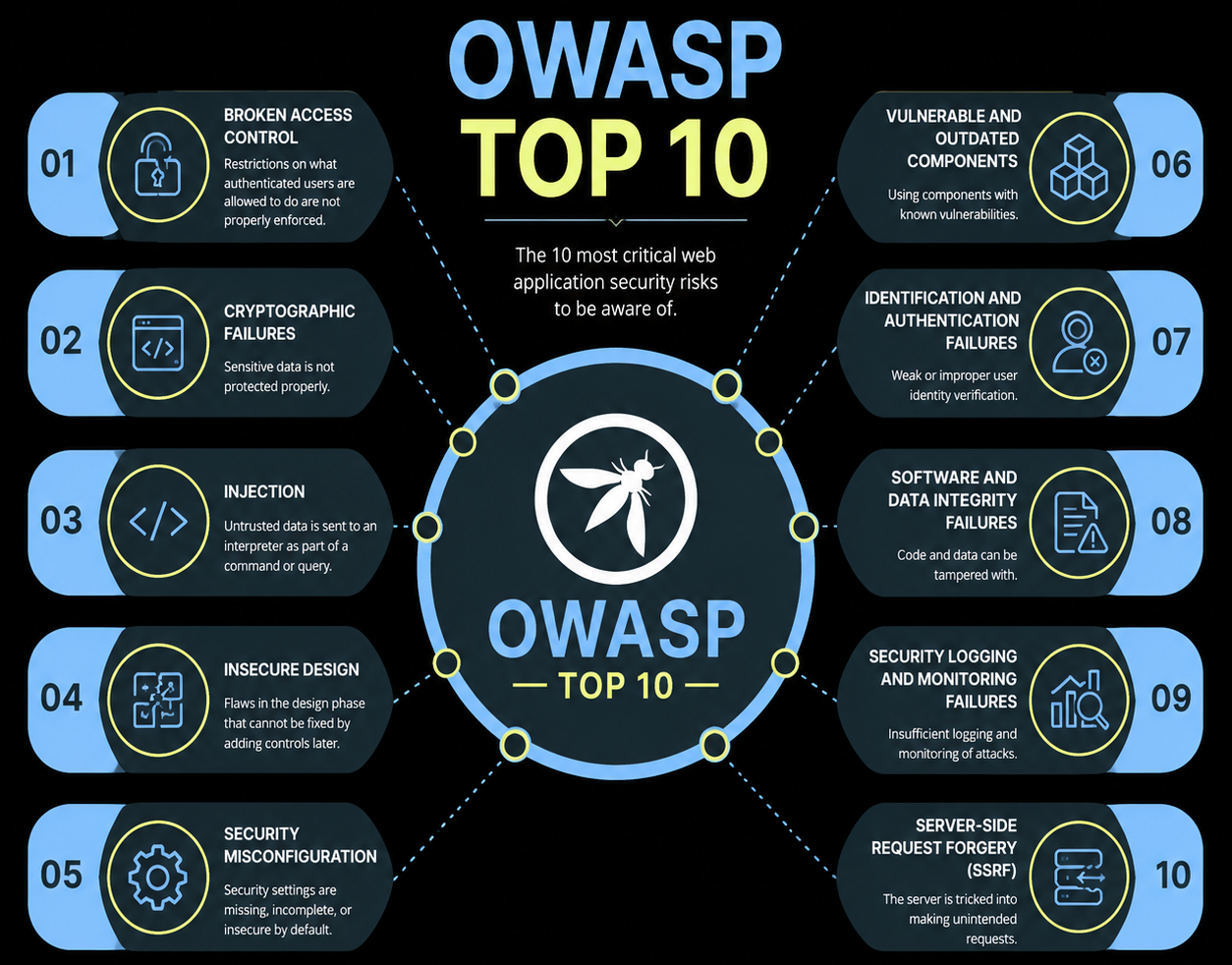
What “Real Understanding” Looks Like
Knowing the OWASP Top 10 is not the same as understanding it. Real understanding shows up when developers can move through four stages:
- Recognize the vulnerability pattern
- Reproduce it in a controlled environment
- Remediate it with secure coding practices
- Retest to verify the fix
For example, a developer may know that SQL injection is dangerous. But can they identify an unsafe query in a legacy codebase? Can they exploit it safely in a lab? Can they replace it with parameterized queries and explain why the fix works?
That is the standard security leaders should aim for.
Signs your team may not understand the OWASP Top 10 deeply enough
- They memorize definitions but miss vulnerabilities during reviews
- They rely completely on scanners without validating findings
- They patch symptoms instead of root causes
- They treat security issues as isolated bugs rather than design problems
- They have never practiced in realistic cybersecurity labs
Why Traditional Security Training Often Falls Short
Slide decks and annual awareness sessions are useful for baseline exposure, but they rarely change developer behavior. The reason is simple: secure coding is a practical skill.
Developers learn best when they can test assumptions, make mistakes, and fix vulnerabilities in a safe environment. That is why hands-on teaching matters more than passive instruction.
Traditional training often fails because it is:
- Too theoretical
- Too generic for the team’s tech stack
- Disconnected from day-to-day development work
- Missing feedback loops and measurable outcomes
In contrast, Cybersecurity Training built around scenarios, labs, and guided exercises helps teams build judgment, not just recall.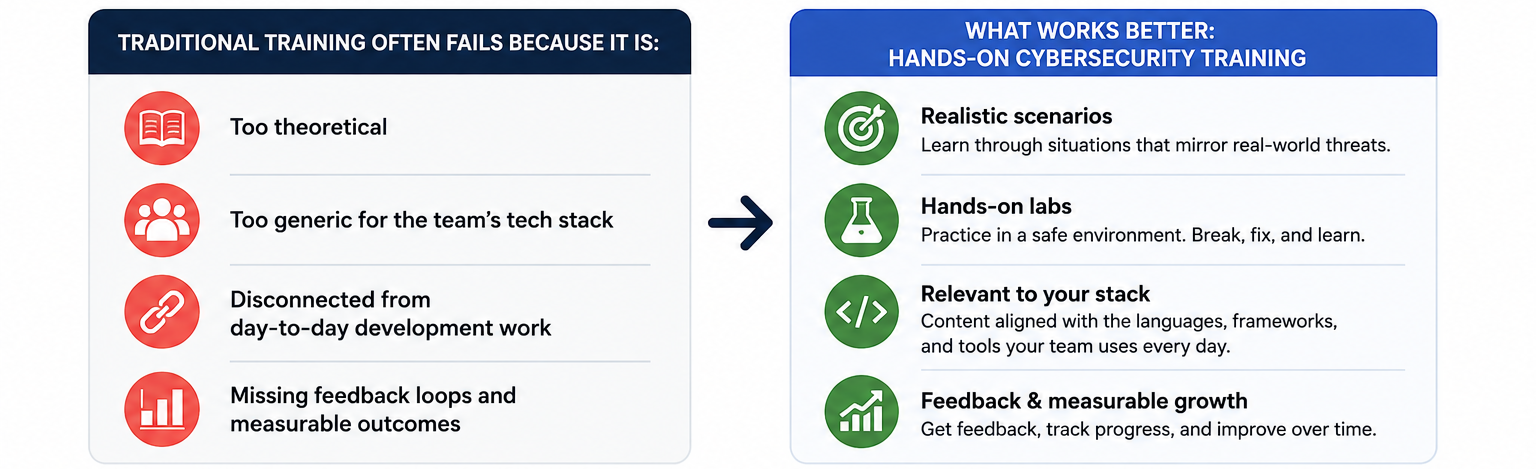
How Cyber Drills and Cyber Ranges Improve OWASP Top 10 Mastery
This is where structured practice becomes powerful. Cyber Drills and Cyber Ranges create environments where developers can work through realistic application security problems without putting production systems at risk.
Instead of asking, “Did they attend the training?” you can ask better questions:
- Can they identify broken access control in a multi-user app?
- Can they fix insecure authentication logic?
- Can they respond quickly when a vulnerable dependency is introduced?
- Can they improve logging and monitoring after an attack path is demonstrated?
Cybersecurity Simulations are especially effective because they combine pressure, context, and repetition. Teams do not just hear about risk. They experience it.
What effective simulations include
- Realistic application scenarios
- Task-based vulnerability discovery
- Guided hints or coaching when needed
- Scoring, analytics, or leaderboard elements
- Clear remediation and debrief steps
For growing companies, this approach is scalable. For larger enterprises, it also creates a repeatable way to benchmark secure coding maturity across teams.
A Practical Framework to Assess Developer OWASP Top 10 Readiness
If you want to measure understanding instead of assuming it, use a simple assessment model.
1. Start with baseline validation
Run a short diagnostic covering common categories such as injection, access control, and misconfiguration. This establishes where the biggest gaps are.
2. Move into role-based labs
Frontend, backend, DevOps, and full-stack engineers face different risk patterns. Tailor cybersecurity education to their actual responsibilities.
3. Use scenario-driven exercises
Build exercises around tasks developers actually perform: reviewing pull requests, hardening APIs, securing secrets, or fixing flawed authentication flows.
4. Track both speed and quality
Fast answers do not always mean good security decisions. Measure whether fixes are complete, maintainable, and aligned with best practices.
5. Repeat regularly
Security knowledge fades when it is not used. Recurring drills turn one-time learning into long-term competence.
Featured snippet answer: The best way to assess developer understanding of the OWASP Top 10 is through hands-on simulations that test whether they can identify, exploit safely, remediate, and verify common application security vulnerabilities in realistic workflows.
Where Simulations Labs Fits In
Simulations Labs helps organizations run practical cybersecurity simulations without the infrastructure burden that often blocks security programs.
Its platform enables teams to launch hands-on labs quickly, monitor performance in real time, and review results from a centralized dashboard. For startups, SMEs, and enterprises, that means less time worrying about setup and more time building capability.
Some especially relevant use cases include:
- hosting CTF-style cyber drills for internal upskilling
- assessing applicants with practical security tasks
- running classroom-style or team-based cybersecurity labs
- reviewing challenge analytics to identify skill gaps
Because Simulations Labs supports ready-made challenges, Docker-based labs, and real-time monitoring, it is well-suited for organizations that want a faster path to measurable cybersecurity training.
If you want more examples, their case studies and guides show how hands-on environments can support education, assessments, and community engagement.
Conclusion
So, how well do your developers understand the OWASP Top 10? If the answer depends on certifications, slide attendance, or self-reported confidence, you probably do not know enough yet.
The strongest teams prove understanding through action. They can spot risk in context, fix it correctly, and repeat that process under realistic conditions. That is why Cyber Drills, Cyber Ranges, and hands-on Cybersecurity Simulations are becoming essential parts of modern cybersecurity education.
If you want to move from awareness to evidence, explore a product demo from Simulations Labs and see how practical, scalable training can raise developer security maturity.
FAQs
What is the best way to teach developers the OWASP Top 10?
The most effective method is hands-on training through labs, simulations, and secure coding exercises that let developers identify and fix vulnerabilities in realistic scenarios.
How do you measure whether developers understand application security?
Use practical assessments, not just quizzes. Good measurement includes vulnerability identification, remediation quality, retesting, and performance analytics over time.
Why are cyber ranges useful for OWASP Top 10 training?
Cyber ranges provide controlled environments where developers can practice against realistic web security issues safely, repeatedly, and with measurable outcomes.
Can startups benefit from cybersecurity simulations?
Yes. Startups can use focused simulations to build secure coding habits early, reduce future technical debt, and improve team readiness without large infrastructure investments.
What is the difference between awareness training and hands-on cybersecurity training?
Awareness training explains concepts. Hands-on cybersecurity training requires learners to apply those concepts in labs or drills, which builds practical skill and retention.
How can Simulations Labs support cybersecurity education?
Simulations Labs provides a managed platform for launching simulations, hosting labs, tracking participant performance, and scaling practical security learning without infrastructure setup.