University Cyber Cup 2026: Bringing Hands-On Cybersecurity Training to Universities
The University Cyber Cup (UCC) 2026 brought universities together to make cybersecurity education more practical, engaging, and accessible. Through Simulations Labs, participating universities gained access to a platform where they could create hands-on cybersecurity challenges, organize competitions, and deliver practical training activities for their students.
The program focused on empowering university staff and professors with the tools and knowledge they need to bring cybersecurity concepts beyond the classroom and give students opportunities to apply their skills in realistic scenarios.
UCC 2026 by the Numbers
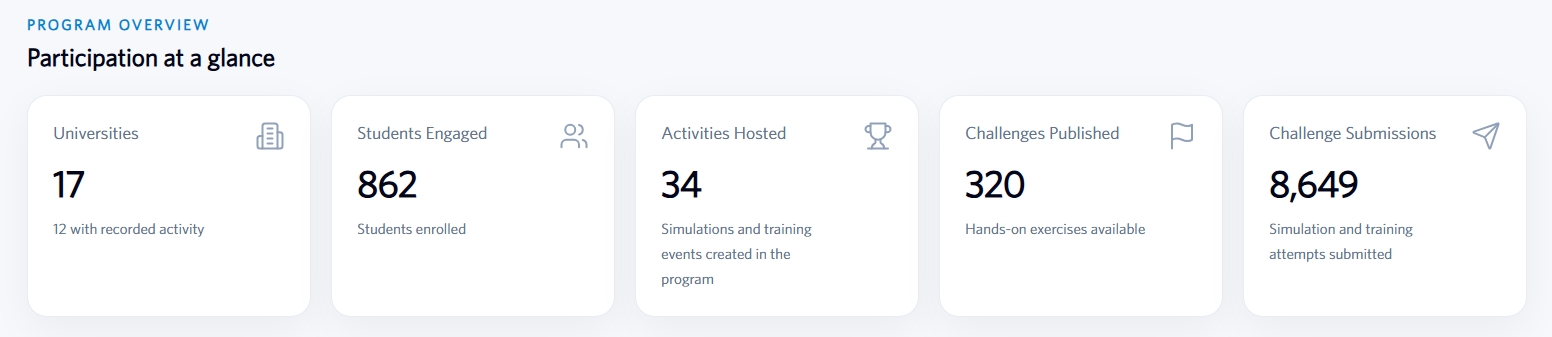
Across the participating universities, the program generated measurable engagement through student enrollment, hands-on exercises, and practical training activities.
| Program Impact | Results |
|---|---|
| Universities Participating | 17 |
| Universities with Recorded Activity | 12 |
| Students Enrolled | 862 |
| Activities Hosted | 34 |
| Challenges Published | 320 |
| Challenge Submissions | 8,649 |
These numbers reflect how universities used the platform to introduce practical cybersecurity experiences into their educational activities. With 320 challenges published and 8,649 submissions recorded, students had thousands of opportunities to engage with hands-on exercises and put their knowledge into practice.
Equipping Universities to Deliver Hands-On Cybersecurity Training
Providing access to a platform was only one part of the University Cyber Cup. The program also aimed to help university staff develop the skills and confidence needed to design and deliver their own cybersecurity training activities.
Through Simulations Labs, participating universities received:
Access to the Simulations Labs platform
Universities could create and manage cybersecurity challenges, organize competitions, and deliver hands-on training activities through a single platform.
Platform training and guidance
Training sessions introduced university staff to the platform and its capabilities, helping them understand how to set up activities and use the available tools to engage students.
Academy courses for practical scenario development
The Simulations Labs Academy provided learning resources to help university staff develop their own labs and cybersecurity scenarios, turning concepts into practical exercises that students could solve.
Guidance on organizing CTF competitions
Universities received guidance on how to structure and organize Capture the Flag (CTF) competitions, giving them a foundation for running practical cybersecurity events within their institutions.
Together, these resources helped universities move from understanding the possibilities of hands-on cybersecurity training to creating and delivering activities for their students.
What Universities Delivered Through UCC 2026
Throughout the program, participating universities turned the tools and resources available through Simulations Labs into practical learning experiences for their students. From recurring CTF competitions to hands-on cybersecurity courses, universities created opportunities for students to apply their knowledge, solve realistic challenges, and explore different areas of cybersecurity.
Monthly CTF Competitions
Universities organized CTF competitions that challenged students to solve cybersecurity problems, investigate scenarios, and apply their technical skills. These competitions gave students opportunities to test their abilities in a practical setting, learn through problem-solving, and engage with cybersecurity beyond traditional coursework.
Hands-On Cybersecurity Courses
Universities created and delivered courses that combined cybersecurity concepts with practical exercises. By incorporating hands-on labs and challenges, educators could give students the opportunity to apply what they studied, experiment in practical environments, and strengthen their understanding through direct experience.
Creating and Publishing Cybersecurity Challenges
University staff developed and published challenges for students to attempt through the platform. These exercises gave educators a way to turn cybersecurity topics into interactive activities while building a collection of practical learning experiences that could support their teaching.
Together, these activities helped universities bring more practical cybersecurity experiences into their educational programs. Students could move beyond studying concepts to actively solving challenges, practicing their skills, and discovering how cybersecurity knowledge can be applied in real-world situations.
Beyond the Numbers: Giving Students New Opportunities
One of the most meaningful outcomes of UCC 2026 was the opportunity for students to explore cybersecurity through practical challenges, including students who may not have had extensive exposure to the field through their existing academic programs.
Feedback from participating universities highlighted the value of giving students a space to experiment, solve challenges, and discover new interests.
The experience at UPEI is one example. Reflecting on the program, the university shared:
Thank you for giving us the opportunity to participate in the University Cyber Cup 2026.
Our students at UPEI thoroughly enjoyed this unique experience and found it both engaging and educational. We ran our challenges throughout August, prior to the start of the new academic year, and were pleased with our students’ performance and enthusiasm. This was particularly encouraging given that we do not currently offer a cybersecurity specialization.
The competition provided our students with valuable exposure to cybersecurity concepts and practical challenges, allowing them to explore a field that was new to many of them. It was exciting to see their interest and engagement grow throughout the program.
Thank you once again for your support and for organizing such a valuable initiative. We look forward to future opportunities for collaboration.
UPEI's experience demonstrates how hands-on cybersecurity activities can introduce students to new areas of technology, encourage exploration, and create engaging learning opportunities, even in institutions without a dedicated cybersecurity specialization.
Similar feedback from participating universities reinforced the value of combining practical exercises with the tools and guidance needed to deliver them.
Empowering Universities to Continue Beyond the Program
The University Cyber Cup was designed to help universities build their capacity to deliver practical cybersecurity education, rather than simply participate in a one-time competition.
By giving university staff access to Simulations Labs, platform training, Academy courses, and guidance on organizing CTFs, the program supported them in developing activities that fit their own educational goals.
These capabilities can support a range of use cases, from classroom labs and student clubs to skill assessments, capstone projects, exams, and university-wide competitions.
The experience also highlighted the role universities can play in making cybersecurity more accessible by creating opportunities for students to practice, experiment, and develop skills in realistic environments.
Looking Ahead
The University Cyber Cup 2026 demonstrated the potential of combining technology, practical resources, and university-led initiatives to expand hands-on cybersecurity education.
With 17 universities participating, 862 students enrolled, 34 activities hosted, and 8,649 challenge submissions recorded, the program provided a foundation for more practical and engaging cybersecurity experiences across higher education.
At Simulations Labs, we believe universities should have the tools and support they need to deliver hands-on training as part of their educational programs. UCC 2026 was a step toward that goal, empowering university staff to create practical learning experiences and helping students discover what they can achieve through cybersecurity.
We thank all participating universities, professors, staff, and students who contributed to the University Cyber Cup 2026 and helped make the program possible.